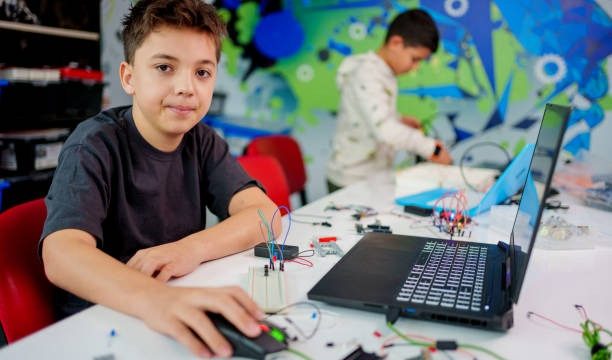
In a world that is constantly evolving and innovating, the importance of STEM education—science, technology, engineering, and mathematics—has never been more pronounced.
Learning through meaningful STEM activities not only equips individuals with essential skills, but it also fosters a sense of curiosity and wonder about the world around us.
These activities can provide a rich, hands-on experience that ignites passion and creativity, making learning feel less like a chore and more like an adventure.
At its core, STEM education encourages critical thinking and problem-solving. When students engage in hands-on activities, they are not just passively absorbing information; they are actively participating in their learning journey. This engagement leads to a deeper understanding of concepts, as learners can see firsthand how theories apply to real-world scenarios. For instance, a simple experiment like growing crystals can spark an interest in chemistry while also teaching patience and observation skills.
The beauty of meaningful STEM activities is that they can be tailored to suit various age groups and learning styles. Whether you are a parent looking to introduce your young child to the wonders of science or an educator seeking to inspire high school students, there is an abundance of options available. Simple tasks, such as building a bridge with toothpicks or creating a homemade volcano, can be both educational and entertaining. These activities not only teach fundamental principles but also encourage collaboration, as participants often work together to solve challenges.
Creating a nurturing environment for STEM exploration is essential. When children feel safe to express their thoughts and ask questions, they are more likely to delve deeper into their interests. Encouraging curiosity can be as simple as asking open-ended questions during an activity. Instead of providing answers, guide them to think critically about what they observe. This approach not only enhances their understanding but also cultivates a lifelong love for learning.
As we consider the role of technology in our lives, it’s important to emphasize the significance of digital literacy within STEM education. In our tech-driven society, understanding how to navigate and utilize technology is crucial. Engaging in activities that incorporate coding, robotics, or even simple computer simulations can prepare learners for future careers. These experiences can demystify technology, empowering individuals to create rather than just consume.
Incorporating nature into STEM activities can also enrich the learning experience. Nature provides a vast array of materials and phenomena that can be explored. A day spent outdoors, observing the patterns in leaves or the behavior of insects, can lead to valuable discussions about biology and ecology. Nature walks can inspire questions about the environment and prompt investigations into how ecosystems function. This connection to the natural world not only enhances scientific understanding but also fosters a sense of stewardship for our planet.
A small shift toward balance can be achieved by integrating art into STEM activities, a practice often referred to as STEAM. This blend allows for creativity to flourish alongside analytical thinking. For instance, designing a structure with artistic flair encourages learners to think about both aesthetics and functionality. This holistic approach to learning nurtures well-rounded individuals who can think critically and creatively, both essential skills in today’s multifaceted world.
Furthermore, the social aspect of STEM activities should not be overlooked. Group projects encourage teamwork and communication, skills that are invaluable in all areas of life. When individuals collaborate, they learn to appreciate different perspectives and approaches to problem-solving. These interactions can foster friendships and create a supportive learning community, further enhancing the educational experience.
As we dive deeper into the realm of meaningful STEM activities, it’s essential to recognize the role of mentorship. Having a guide or mentor can significantly impact a learner’s journey. Whether it’s a teacher, a family member, or a community leader, mentors can provide insights, encouragement, and resources that can make all the difference. Their passion for the subject can be contagious, inspiring the next generation to explore the possibilities within STEM fields.
Moreover, the integration of real-world applications into STEM learning can bridge the gap between theory and practice. Understanding how scientific principles apply to everyday life makes learning more relevant and exciting. For example, discussing renewable energy sources while working on a project about solar panels can help learners grasp the importance of sustainability. These connections can motivate individuals to consider careers in fields that contribute positively to society.
As we look to the future, it’s clear that fostering a love for STEM through meaningful activities is essential. Encouraging exploration, creativity, and collaboration prepares individuals for the challenges and opportunities ahead. As parents, educators, and mentors, we can play a pivotal role in shaping the minds of tomorrow by providing engaging and supportive environments for STEM learning.
In conclusion, learning through meaningful STEM activities is not just about acquiring knowledge; it’s about nurturing curiosity, creativity, and critical thinking. By creating a space where exploration is encouraged, we can inspire a generation of learners who are equipped to tackle the complexities of the modern world. As we embark on this journey together, let us celebrate the wonders of science, technology, engineering, and mathematics, and embrace the joy of discovery in every little experiment and project we undertake.