In a world increasingly driven by technology and innovation, the importance of fostering curiosity and creativity in children cannot be overstated.
STEM education—encompassing science, technology, engineering, and mathematics—has emerged as a vital component of a well-rounded learning experience.
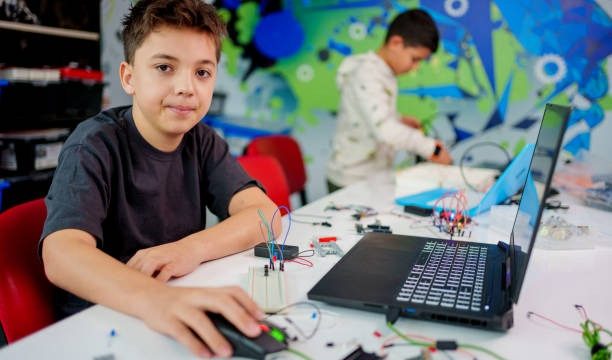
One of the most engaging ways to introduce these concepts to young minds is through STEM kits that support active learning. These kits transform traditional educational approaches, allowing children to explore, experiment, and discover in hands-on ways.
The beauty of STEM kits lies in their ability to make learning tangible and enjoyable. Instead of merely reading about scientific principles or mathematical concepts, children can actively engage with the materials, fostering a deeper understanding and appreciation for the subjects. Whether it’s building a simple circuit, conducting a chemistry experiment, or programming a robot, these kits encourage exploration and creativity.
Active learning through STEM kits promotes critical thinking and problem-solving skills. As children interact with the materials, they begin to ask questions, propose hypotheses, and seek solutions. This exploratory approach not only cultivates a sense of curiosity but also empowers them to take ownership of their learning journey. When children are encouraged to experiment and make mistakes, they learn resilience and adaptability—qualities that are invaluable in today’s ever-changing world.
A gentle introduction to the wonders of science can be found in kits that focus on simple experiments. These kits often come with easy-to-follow instructions and all the necessary materials, allowing children to dive into the world of scientific inquiry without feeling overwhelmed. For instance, a kit that explores the principles of chemistry through colorful reactions can be incredibly captivating. Watching baking soda and vinegar create an effervescent eruption is more than just fun; it’s a visual representation of chemical reactions that sparks curiosity and questions.
Incorporating technology into learning is another exciting aspect of STEM kits. Many kits are designed to introduce coding and robotics in a playful way. Children can build their own robots and learn to program them to perform specific tasks. This hands-on experience not only demystifies technology but also encourages logical thinking and creativity. The thrill of seeing a robot come to life after hours of building and coding is an experience that can ignite a passion for technology that lasts a lifetime.
Engineering-focused kits provide a platform for children to design and build their own structures. These kits often include various materials that challenge young builders to think critically about stability, balance, and design. As they construct bridges, towers, or even simple machines, they learn about the principles of engineering in a practical context. The process of trial and error in engineering teaches children that failure is often a stepping stone to success, encouraging them to think outside the box.
Math can sometimes feel abstract to young learners, but STEM kits that incorporate mathematical concepts through engaging activities make the subject come alive. Kits that involve measuring, counting, and even basic geometry through building projects can help children understand the relevance of math in everyday life. For instance, constructing a model of a house requires measurements and calculations, allowing children to see the practical application of mathematical principles in a fun setting.
As parents and educators, we often seek ways to create balance in our children’s lives. STEM kits offer a wonderful opportunity to blend learning with play. They encourage families to spend time together, exploring and discovering new concepts. Setting aside a weekend afternoon to dive into a STEM project can create lasting memories and foster a love for learning. The collaborative nature of these kits encourages teamwork, communication, and shared problem-solving, further enriching the experience.
Moreover, the flexibility of STEM kits allows for personalized learning experiences. Children can progress at their own pace, revisiting concepts and projects that resonate with them. This autonomy not only boosts confidence but also allows children to explore their interests deeply. A child fascinated by space might gravitate toward a kit that simulates rocket launches, while another with a passion for animals may prefer a biology kit that explores ecosystems. This tailored approach to learning can help children develop a sense of identity and purpose in their educational journey.
In our fast-paced world, it’s easy to overlook the importance of nurturing creativity and curiosity in our children. STEM kits serve as a gentle reminder that learning can be an enjoyable, dynamic process. They provide a bridge between theoretical knowledge and real-world application, encouraging children to engage with the world around them in meaningful ways.
As we embrace the wonders of active learning through STEM kits, we open doors to a future filled with possibilities. The skills and knowledge children gain today will shape their tomorrow, equipping them to navigate a world that increasingly relies on innovation and critical thinking. By fostering a love for science, technology, engineering, and mathematics in a fun, engaging way, we empower the next generation to explore their passions and tackle the challenges of the future.
In conclusion, STEM kits that support active learning are more than just educational tools; they are gateways to exploration, creativity, and personal growth. By encouraging children to engage with the world through hands-on experiences, we can inspire a lifelong love of learning. So, let’s embrace the joy of discovery together, nurturing the inquisitive minds of tomorrow. Whether through building, coding, or experimenting, the journey of learning is one best taken with curiosity, creativity, and a sense of wonder.