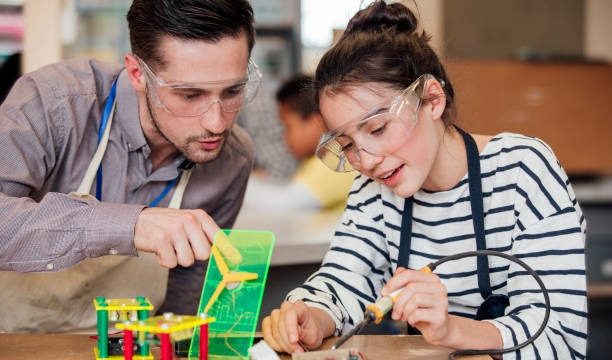
Science fairs offer a delightful opportunity for students to explore the wonders of science while fostering creativity and critical thinking.
Among the myriad of fascinating scientific phenomena, surface tension stands out as both intriguing and accessible.
This natural force offers a wealth of possibilities for engaging projects that can captivate both participants and viewers alike.
Understanding surface tension begins with a simple observation. If you’ve ever seen water beads on a freshly waxed car or witnessed a tiny insect walking effortlessly across a pond, you’ve experienced this remarkable property. Surface tension occurs because molecules at the surface of a liquid experience different forces than those in the bulk of the liquid. This unique characteristic creates a sort of ‘skin’ on the surface, allowing certain objects to float or certain creatures to thrive in ways that might seem impossible.
A gentle exploration of this topic can lead to numerous science fair project ideas that are not only educational but also fun to execute.
One delightful project could involve experimenting with various liquids to see how their surface tension differs. You might start with water, then add soap, oil, or even sugar solutions, and observe how each affects the ability of small objects, like paper clips or small beads, to float. This hands-on activity can be a wonderful way to illustrate the concept of surface tension and its variability across different substances.
Another captivating avenue is to investigate the effects of temperature on surface tension. By performing simple experiments where you heat or cool water and observe changes in its properties, you can uncover how temperature impacts the strength of the surface tension. This project can lead to discussions about everyday applications, such as why hot water might be less effective at holding certain objects on its surface compared to cold water.
The artistic side of science can also shine through with a project that combines surface tension with color and design. Using a shallow dish filled with milk, a few drops of food coloring, and a drop of dish soap, you can create stunning visual displays. When the soap is introduced, it disrupts the surface tension, causing the colors to swirl and dance in mesmerizing patterns. This project not only captivates the eye but also provides a vivid demonstration of how surface tension can be manipulated.
For those who enjoy a bit of engineering, a project could involve designing a raft made from various materials to test how well they float on water. By constructing rafts with different surface areas and materials—such as straws, wood, or even recycled materials—you can explore the relationship between shape, weight, and surface tension. This project encourages creativity and problem-solving while reinforcing the principles of buoyancy and surface tension.
A small shift toward balance can occur when exploring the relationship between surface tension and soap. A fascinating experiment could focus on how soap affects the surface tension of water. By adding varying amounts of soap to water and then testing how many paper clips can float on the surface, you can visually demonstrate the soap’s impact. This project not only provides a clear visual of surface tension in action but also opens the door to discussions on the chemistry behind cleaning products and their effectiveness.
As you dive deeper into the subject, consider how surface tension plays a role in nature. A project could involve observing and documenting how different insects, such as water striders, utilize surface tension to skate across the surface of ponds. By creating a simple habitat and observing these insects in action, you can connect the scientific concept to real-world applications, enhancing your understanding of ecology and biology.
Engaging with surface tension can also inspire thoughts about environmental issues. A project could focus on how pollution affects the surface tension of water bodies. By simulating oil spills in a controlled environment, you can observe how oil disrupts the natural balance and affects aquatic life. This approach not only highlights the science behind surface tension but also encourages a conversation about environmental stewardship and the importance of protecting our water resources.
As you prepare for your science fair, remember that the journey of exploration is as important as the final presentation. Embrace the process of learning, experimenting, and discovering. Each project offers a unique chance to engage with science in a hands-on way, nurturing curiosity and wonder.
In the end, the beauty of surface tension lies in its simplicity and complexity. It’s a reminder of how even the smallest forces can have significant impacts, much like our actions in the world around us. Whether you’re floating paper clips, creating colorful displays, or observing nature, each experience is an opportunity to learn and grow.
So, gather your materials, ignite your curiosity, and prepare to delve into the captivating world of surface tension. Whatever project you choose, know that you are not only participating in a science fair but also embarking on a journey of discovery that could inspire a lifelong love of science. Enjoy the process, and let your creativity soar as you explore the wonders of this fascinating topic.